Introduction
PAYE and self-employment describe two different ways of working and paying tax in the UK. Under Pay As You Earn (PAYE), an employer deducts Income Tax and National Insurance from wages before payment, so take-home pay usually reflects those deductions. Self-employed people manage their own tax affairs, set aside money for tax, and report income through a Self Assessment tax return. Each route affects cash flow, rights at work, and the records required, including invoices, payslips, and evidence of allowable business expenses. GOV.UK guidance on PAYE and Self Assessment explains the rules.
PAYE employment and self-employment in the UK
PAYE employment usually involves a contract of employment. An employer controls working hours, provides work, and pays a regular wage through payroll. In many roles, the employer also provides statutory rights such as paid holiday and Statutory Sick Pay, subject to eligibility. Guidance on employment status sits on GOV.UK.
Self-employment suits people who run a business or work as a sole trader or partner. A client pays for a service, rather than employing the worker. The self-employed person sets prices, chooses how to deliver the work, and may hire others. That person also manages business records, invoices, and allowable expenses. HMRC explains Self Assessment and record keeping on GOV.UK.
- Control: employers direct employees; clients agree outcomes with self-employed contractors.
- Risk: employees face less financial risk; self-employed workers carry costs when work slows.
- Benefits: employees may receive workplace benefits; self-employed people arrange cover and pensions.
Status depends on the facts, not a job title. Some roles sit in a grey area, so checking status early helps avoid tax and rights disputes.

How income tax and National Insurance work under PAYE versus self-employment
Under PAYE, the employer runs payroll and calculates Income Tax and National Insurance contributions (NICs) each time wages are paid. Tax usually follows the employee tax code, which reflects the Personal Allowance and any adjustments. NICs also come off automatically, based on earnings in each pay period. As a result, take-home pay tends to stay predictable, although changes to pay, benefits, or the tax code can alter deductions. HM Revenue & Customs (HMRC) sets the rules for PAYE and tax codes, with guidance available on GOV.UK.
Self-employed people pay Income Tax through Self Assessment, which means declaring business income and allowable expenses for the tax year. HMRC then calculates the tax due, and payment normally falls on 31 January after the end of the tax year. Many people also make payments on account, which are advance payments towards the next year’s bill. This timing can create uneven cash flow, so setting aside money from each invoice often helps. HMRC explains Self Assessment deadlines and payments on GOV.UK.
National Insurance works differently as well. Employees usually pay Class 1 NICs through payroll, while employers pay a separate employer NICs charge. Self-employed people may pay Class 2 NICs (if profits meet the threshold) and Class 4 NICs based on annual profits. These NICs support access to certain state benefits, including the State Pension, although entitlement depends on an individual’s National Insurance record. Current NICs classes and thresholds appear on GOV.UK.
Another key difference relates to expenses. Employees can claim tax relief on certain work costs, but the rules are narrow. Self-employed people can usually deduct a wider range of business expenses, provided the costs are wholly and exclusively for business purposes, which can reduce taxable profit.
Reporting and administration: payslips, Self Assessment, records, and deadlines
PAYE: payslips and employer reporting
Under PAYE, the employer handles most reporting and administration through payroll. Each pay period, the employer issues a payslip that shows gross pay, Income Tax, National Insurance contributions, pension deductions, and any other adjustments. Employees should keep payslips and P60s, since those documents help when checking a tax code, applying for a mortgage, or confirming income.
Employers report pay and deductions to HM Revenue and Customs (HMRC) in real time using Real Time Information (RTI). That process reduces the need for employees to file a tax return, although some people still need Self Assessment, such as higher earners with extra income or people with complex tax affairs. HMRC explains when Self Assessment applies on GOV.UK.
Self-employed: Self Assessment and record keeping
Self-employed people take responsibility for reporting income and expenses. Most submit a Self Assessment tax return each year and pay Income Tax and National Insurance based on taxable profit. Accurate records support the figures on the return and help a business track cash flow.
Records usually include:
- Sales invoices and income received (including cash and card receipts)
- Business expenses, with receipts and supplier invoices
- Bank statements for business accounts
- Details of assets used for the business, such as equipment
- Mileage logs and travel evidence where relevant
HMRC sets out record-keeping expectations on GOV.UK. Many people use accounting software to organise invoices and expenses, but the key requirement remains clear, complete records.
Deadlines and payments to plan for
PAYE deductions happen automatically when wages are paid, so deadlines rarely affect employees directly. Self-employed people, however, must plan around filing and payment dates. For most individuals, the online Self Assessment deadline falls on 31 January after the end of the tax year. The same date often applies to the balancing payment for that tax year and the first “payment on account”, which represents an advance payment towards the next tax bill. A second payment on account usually falls on 31 July.
HMRC publishes current Self Assessment deadlines and payment rules on GOV.UK. Late filing or late payment can trigger penalties and interest, so a diary reminder and a separate tax savings pot often help maintain control.
Employment rights and protections: holiday pay, sick pay, pensions, and redundancy
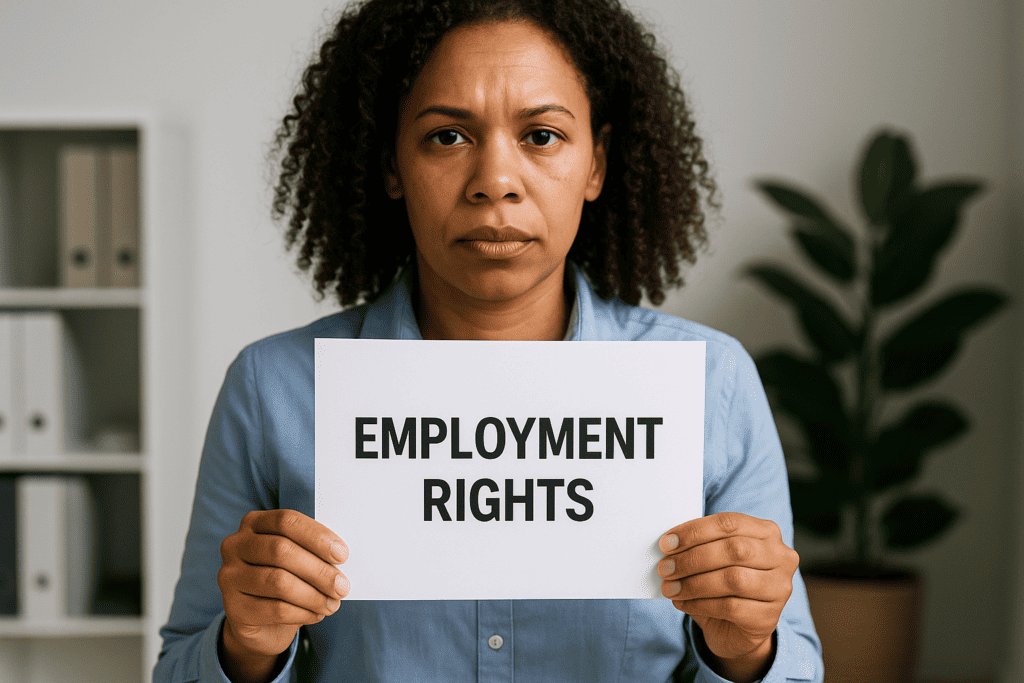
Employment status shapes the rights and protections that apply at work. PAYE employees usually qualify for a set of statutory rights, while self-employed people often rely on contract terms and personal arrangements. Disputes about status can arise when a role looks like employment in practice but the contract describes self-employment. Guidance on status and workplace rights sits on GOV.UK.
Holiday entitlement provides a clear example. Employees and many workers receive paid annual leave, with a statutory minimum of 5.6 weeks per year for full-time roles. Employers calculate and pay holiday pay through payroll, so the cost sits with the business rather than the individual. Self-employed people do not receive paid holiday as a legal right. Time off usually means no income unless a contract includes paid leave or the person prices work to cover breaks.
Sick pay works in a similar way. Eligible employees can receive Statutory Sick Pay (SSP) when illness prevents work, subject to earnings and other rules. Employers administer SSP and record absences. Self-employed people cannot claim SSP from a client. Instead, support may come from state benefits, savings, or insurance, depending on circumstances. Details of SSP eligibility and rates appear on GOV.UK.
Pensions also differ. Many employees enter a workplace pension through automatic enrolment, with employer contributions alongside employee contributions. Self-employed people arrange pensions independently, so contributions depend on cash flow and planning. Redundancy protection provides another distinction: employees with sufficient service may qualify for statutory redundancy pay and notice rights if an employer ends a role. Self-employed people usually have no redundancy entitlement, since a client can end a contract under its agreed terms.
Business costs and allowable expenses for self-employed workers compared with employees
What counts as a business cost for self-employed people
Self-employed workers can usually deduct certain business costs from taxable profits. A business cost is an expense that the business pays wholly and exclusively for work. That rule means the cost must relate directly to earning income, rather than personal living. GOV.UK guidance on allowable expenses explains the principle and gives examples.
Common allowable expenses include:
- Office costs such as stationery, printing, and business phone bills.
- Travel costs for business journeys, including public transport and mileage, but not ordinary commuting.
- Professional costs such as trade subscriptions, insurance, and accountancy fees.
- Marketing such as website hosting and advertising.
- Stock and materials used to provide goods or services.
Some costs need extra care. Meals during ordinary working days rarely qualify, while subsistence during qualifying business travel may qualify. Capital items, such as a laptop or machinery, often fall under capital allowances rather than day-to-day expenses.
How mixed personal and business use works
Many costs have both business and personal use. In those cases, self-employed workers should claim only the business proportion. A mobile phone bill provides a clear example: a person can claim the share that relates to business calls and data. Home working also needs a sensible method. Some people use simplified expenses, while others apportion actual household costs such as heat, light, and broadband. GOV.UK simplified expenses sets out when a flat-rate approach may apply.
Claiming expenses reduces taxable profit, not the tax bill pound for pound. The saving depends on the tax rate that applies to the profit.
What employees can claim, and why it differs
Employees face tighter rules. An employee can claim tax relief only for expenses that are necessary for the job and not reimbursed by the employer. HM Revenue and Customs (HMRC) applies a strict test: the employee must incur the cost wholly, exclusively, and necessarily in performing the duties of employment. That standard excludes many common costs, including ordinary commuting, most home working costs, and everyday clothing.
Where a claim applies, it often covers:
- Work-related professional fees and subscriptions approved by HMRC.
- Uniforms and protective clothing, including cleaning costs in some cases.
- Business travel that the employer does not reimburse.
Employees can usually claim online through GOV.UK. Some claims adjust the tax code, which changes take-home pay during the year.
Practical comparison: cash flow and record keeping
Self-employed workers often pay costs upfront and recover value through lower taxable profits. That approach can affect cash flow, especially when a business needs equipment, insurance, or software. Accurate records also matter, since HMRC may ask for evidence such as invoices, receipts, and bank statements.
Employees usually experience a simpler position. An employer often pays for tools, training, and travel, or reimburses expenses through an internal policy. Even so, an employee should keep evidence for any unreimbursed costs claimed for tax relief.
When choosing between PAYE and self-employment, expense treatment rarely sits alone. A realistic budget should consider both allowable deductions and the costs that a person must fund personally.
Choosing the right status: HMRC tests, common grey areas, and practical examples
HMRC decides status by looking at the working relationship, not only the contract wording. The key tests focus on control (who decides how, when, and where the work happens), substitution (whether someone else can do the work), and mutuality of obligation (whether the engager must offer work and the worker must accept it). HMRC explains these factors and the wider approach on GOV.UK.
Grey areas often arise when a role sits between employment and running a business. For example, a contractor may invoice a client and supply equipment, yet still work set hours under close supervision. That pattern can point towards employment, even if the paperwork says “self-employed”. Another common issue involves substitution clauses. A contract may allow a substitute, but if the client would not accept a replacement in practice, the right may carry little weight.
Practical examples help clarify the difference. A delivery driver who must follow a rota, wear a branded uniform, and use a company van under set rules may look like an employee. By contrast, a tradesperson who quotes for jobs, buys materials, fixes defects at personal cost, and works for several customers usually shows business risk and independence, which supports self-employment. A consultant who agrees a project fee, sets the method, and can send a suitably qualified colleague may also fit self-employment, provided the client does not control day-to-day work.
When uncertainty remains, HMRC offers the Check Employment Status for Tax (CEST) tool. CEST can support a decision, yet accurate inputs matter, so the answers should reflect day-to-day reality. Where status affects tax and rights, written terms should match working practices, and both sides should keep clear evidence of how the arrangement operates.
FAQ
Is PAYE always employment?
No. PAYE describes how tax is collected, not the legal status. Some workers sit on payroll while working through an agency or umbrella company, which can affect who counts as the employer for rights and benefits. If status looks unclear, check the employment status guidance on GOV.UK.
Can someone be both PAYE and self-employed?
Yes. A person can hold a PAYE job and run a separate self-employed business. In that case, the PAYE role stays taxed through payroll, while the self-employed income usually needs Self Assessment. Keeping separate records for each income stream helps avoid errors.
How do I check my employment status?
Start with the reality of the working relationship, such as who controls the work and whether a genuine substitute can do it. HMRC provides the Check Employment Status for Tax tool on GOV.UK, which can support discussions with a client or engager. Even so, contracts and day-to-day practice both matter.
What happens if I get my status wrong?
A wrong status can lead to unpaid tax and National Insurance, plus interest and possible penalties. It can also affect workplace rights, such as holiday pay. If a mistake comes to light, act quickly and speak to HMRC using the contact options on GOV.UK.
Do self-employed people get sick pay or holiday pay?
Not as a statutory right in most cases. Self-employed people typically price time off into fees and arrange cover through savings or insurance. Some contracts offer paid leave, although that arrangement can signal employment-like features, so review the terms carefully.
Conclusion
PAYE and self-employment can both work well in the UK, yet each option brings different tax treatment, admin duties, and rights at work. PAYE usually suits people who want payroll handled for them and who value statutory protections such as paid holiday and sick pay. Self-employment often suits people who want more control over how work is done and who can manage variable income, record keeping, and Self Assessment.
Status matters because HMRC and employment law look at the reality of the working relationship, not only the label in a contract. When a role sits in a grey area, use official guidance and keep clear evidence of how the work operates in practice. HMRC’s employment status guidance on GOV.UK provides a reliable starting point.
If uncertainty remains, seek tailored advice before signing terms or changing how work is structured.